GAN-Inversion with StyleGAN2
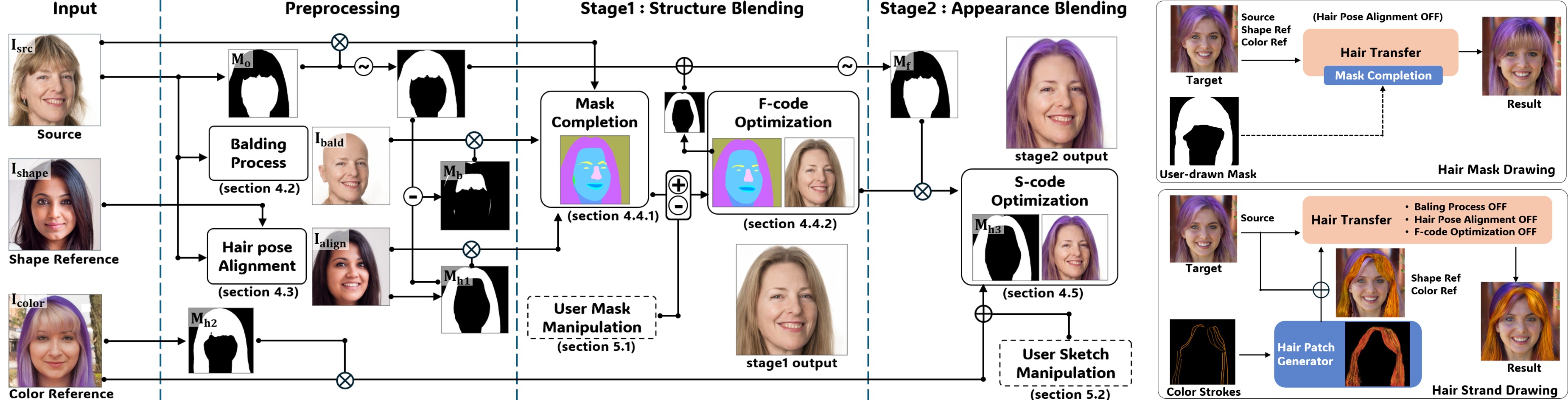
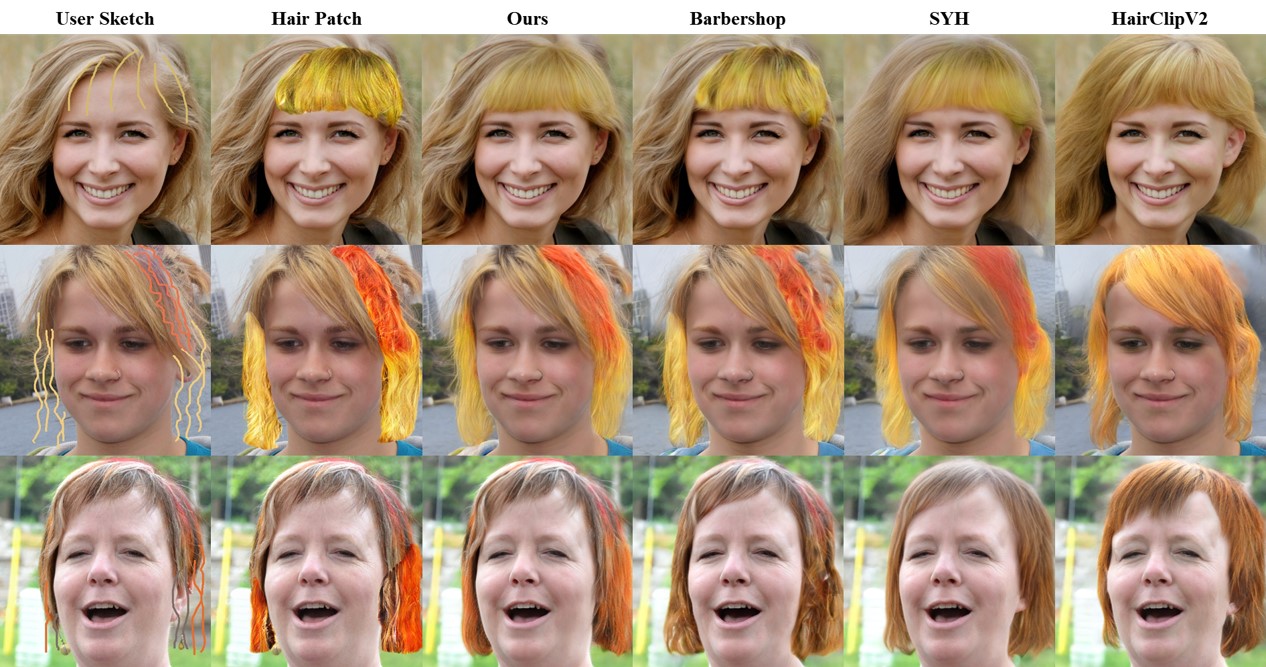
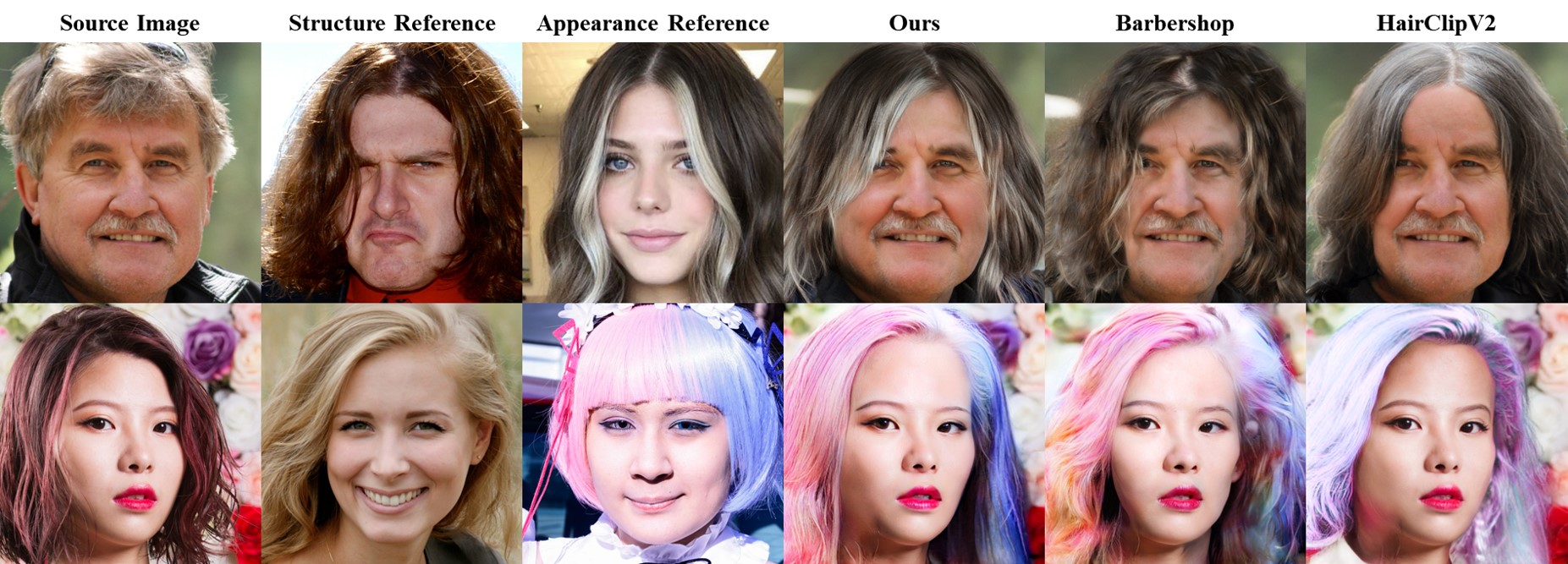
We have explored GAN-inversion with StyleGAN2 as a powerful tool for high-fidelity hairstyle manipulation. Building on the latent-space structure of StyleGAN2, our research focused on improving semantic alignment between source and reference images and on producing detailed, artifact-free hair transfer results.
The core technical contributions of this line of work include:
- Structural Integration with Refined Mask Completion — improving semantic alignment between the source image and the reference style, which substantially reduces blending artifacts during hair transfer.
- Improved Latent Code Optimization — combining masked perceptual and style components in the inversion objective so that fine-grained hair attributes such as color fidelity and strand-level texture are preserved.
- Reference- and Sketch-Based Editing — supporting both reference-image-driven and sketch-driven hair editing through a unified inversion pipeline, packaged with a Streamlit-based interactive web interface.
This work — released as VividHair — demonstrates clear improvements over prior state-of-the-art hair manipulation techniques in both generation quality and usability. The insights from StyleGAN2 inversion directly inform our current DiT-based hair-editing program, where we move from GAN-inversion to diffusion-transformer priors for the next generation of controllable generation.
programming experience
Python, PyTorch, StyleGAN2, encoder4editing, Streamlit