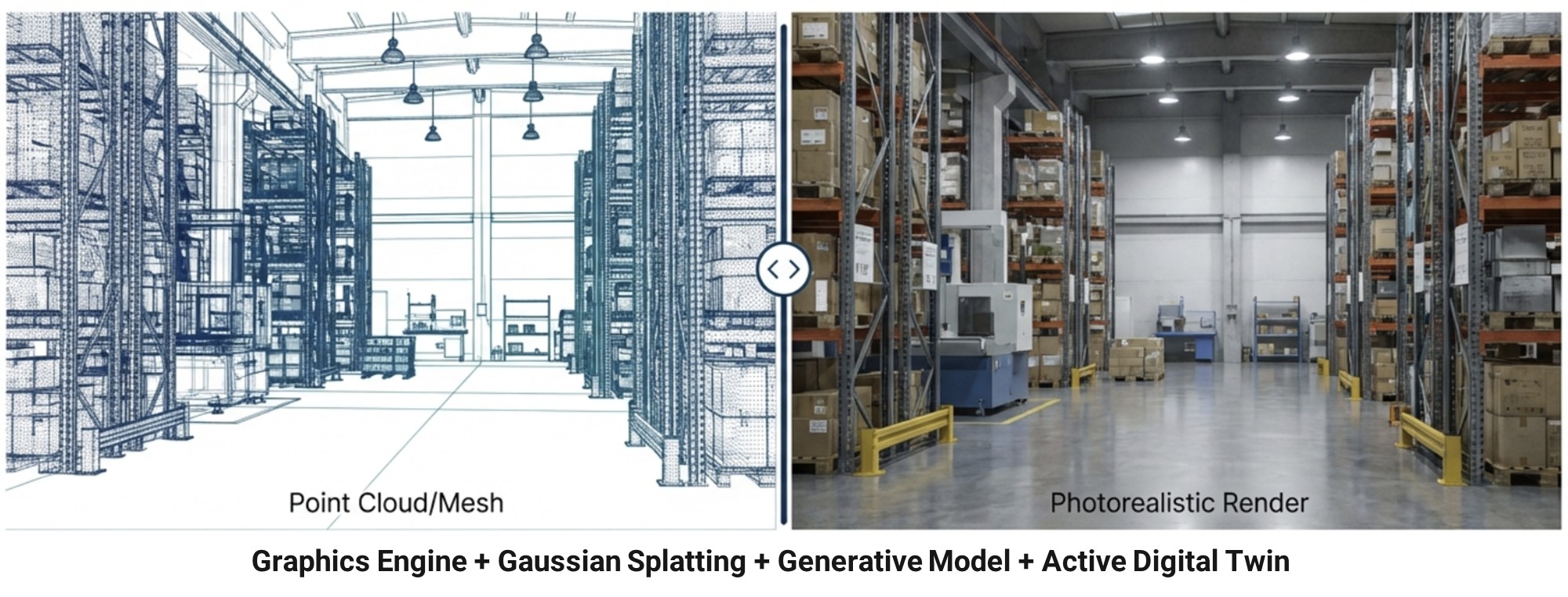
3D Gaussian Splatting — Medium Models and Real-time Reconstruction
We push 3D Gaussian Splatting (3DGS) as a unifying scene representation for both physically-grounded reconstruction and real-time digital twins. Our research questions the implicit “thin-surface” assumption of standard 3DGS and develops both more accurate volumetric formulations and faster incremental reconstruction systems suitable for live capture.
Recent directions include:
- Medium-aware 3DGS Reformulation: Treating Gaussian primitives as volumetric participating media rather than oriented surface elements, yielding more physically meaningful blending — especially for semi-transparent and overlapping structures.
- Fragment-level Gradient Accumulation: Forward-pass and gradient reformulations that better handle overlapped Gaussians and produce sharper optimization signals on hard regions.
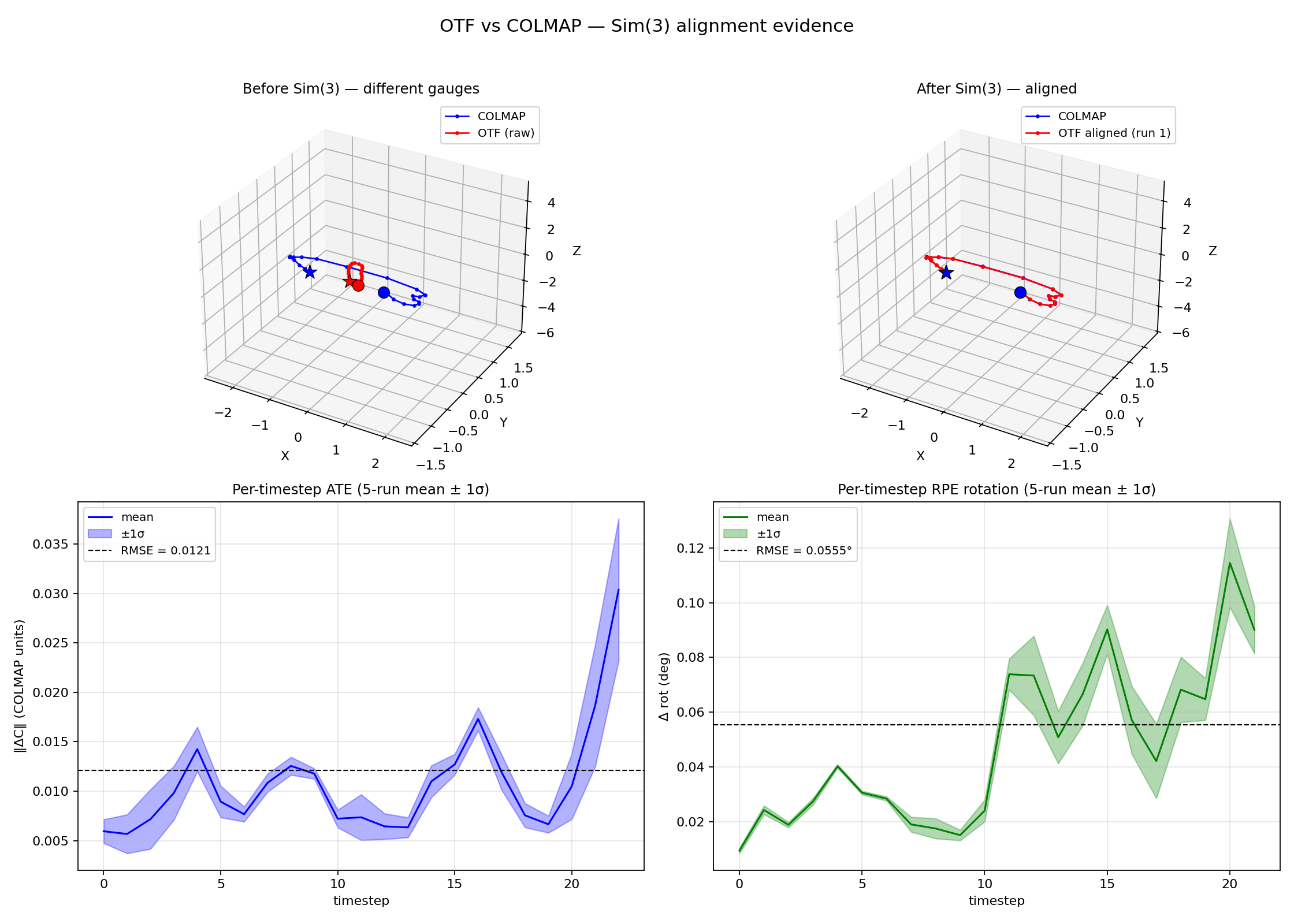
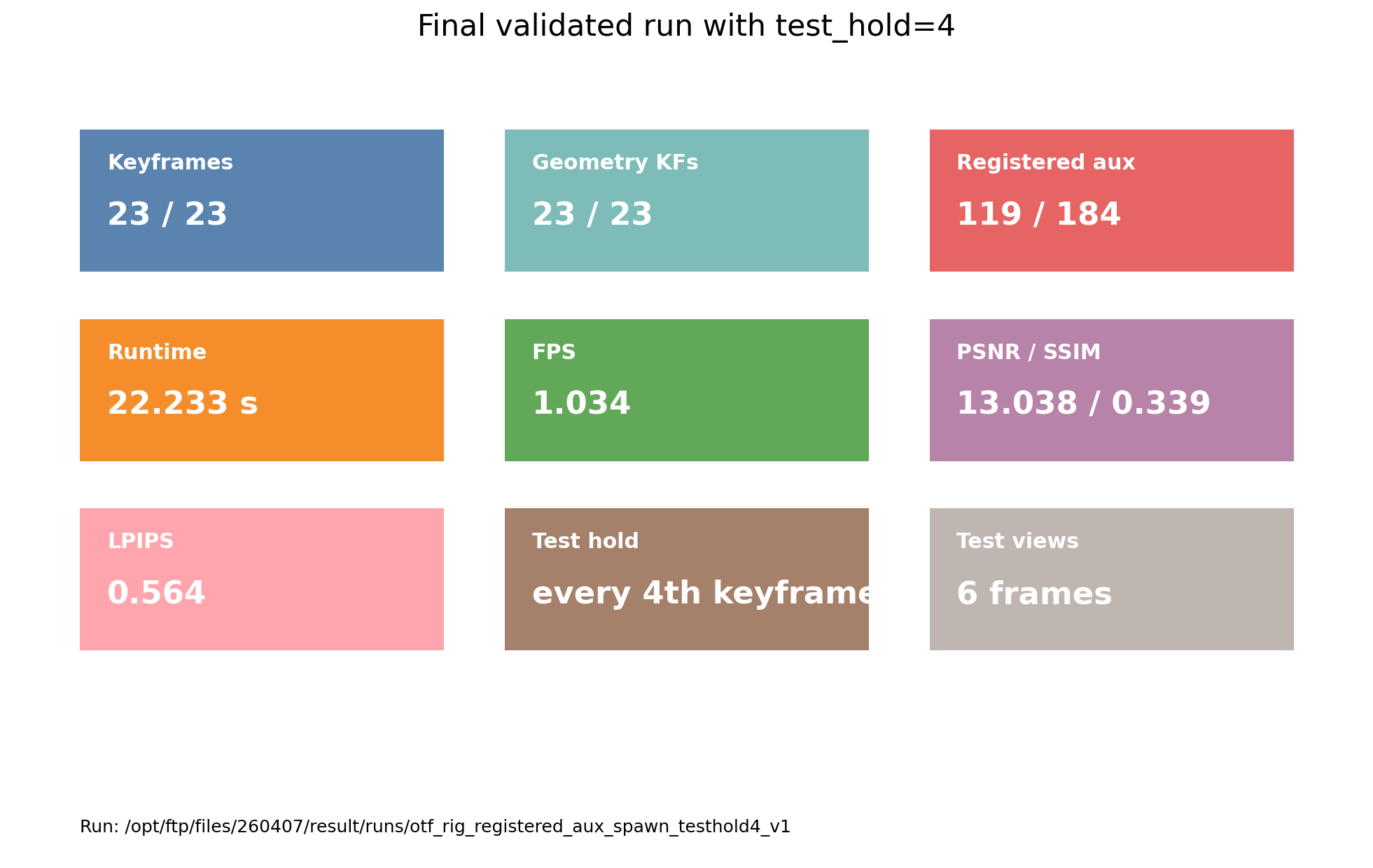
- High-speed On-the-fly 3DGS: Rig-constrained streaming reconstruction from multi-camera rigs, where the number of pose unknowns is reduced from per-camera to per-rig, enabling real-time incremental reconstruction with strong robustness over classic SfM pipelines.
programming experience
Python, PyTorch, CUDA, Vulkan, custom rasterizer kernels, COLMAP/SfM pipelines