On-the-fly Gaussian Splatting for Vehicle Surround View
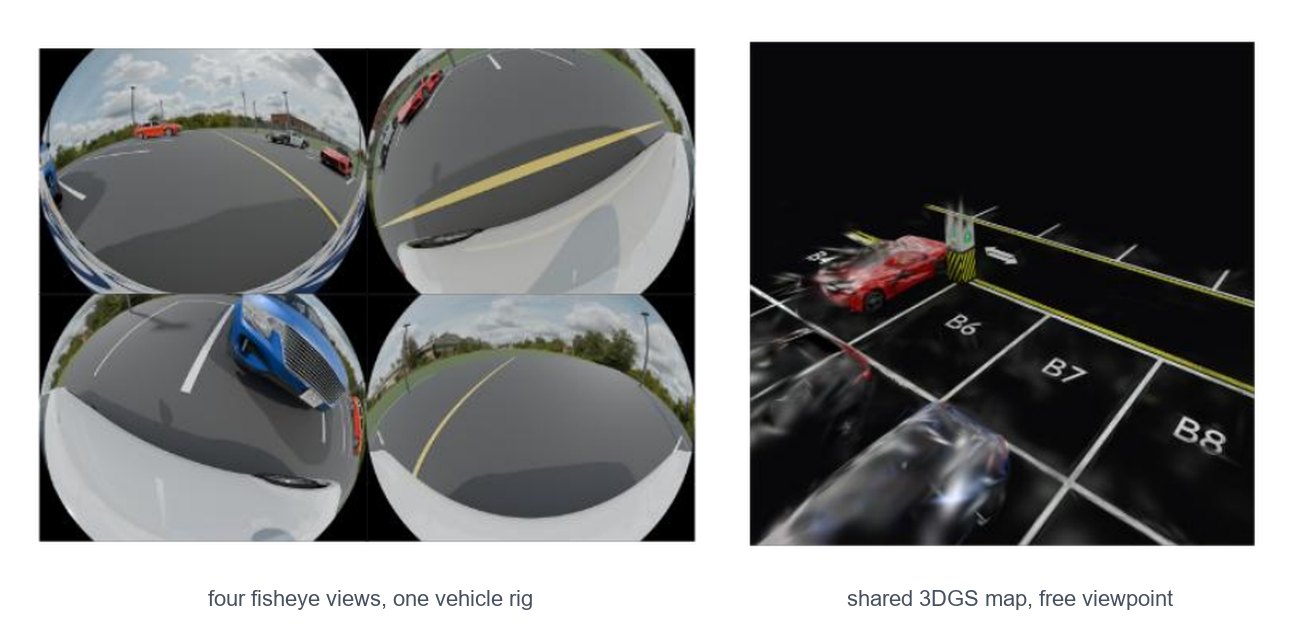
We are building a surround view for vehicles on top of an explicit 3D scene representation. Four fisheye cameras are mounted on the vehicle body — front, rear, left and right — and the scene around the car is reconstructed as 3D Gaussians while the car is driving, rather than being optimised offline after the sequence has been captured. The target scenario is low-speed manoeuvring in underground parking structures, where the driver needs to see what is beside and behind the car, and where the objects that matter — pillars, kerbs, neighbouring vehicles — all have height.
Why the standard surround view is not enough
Production around-view monitors are built on inverse-perspective mapping (IPM): the four camera images are re-projected onto a single ground plane and stitched. That assumption is exact only for the road surface. Anything standing above the ground — a pillar, an open door, an adjacent car — is projected as if it were painted flat, so it is stretched along the viewing direction and appears to lie down on the floor. It is also a fixed product: because there is no 3D structure behind it, the composite can only ever be shown from the one virtual viewpoint the homography was built for.
An explicit 3D map removes that assumption. The question we work on is how good such a map can be made while it is still being built during the drive, from a camera rig that is wide-angle, low-overlap and rigidly fixed to a moving body.
Approach
On-the-fly incremental reconstruction. Instead of optimising a whole captured sequence at once, the map is bootstrapped once and then updated per frame: the incoming view is posed against the current map, new Gaussians are introduced only where the render-versus-image residual and a depth estimate agree that geometry is missing, a lightweight optimisation step corrects the position, colour, scale and opacity of the existing map, and redundant Gaussians are removed to keep memory and compute bounded. No re-optimisation of the full sequence is required.
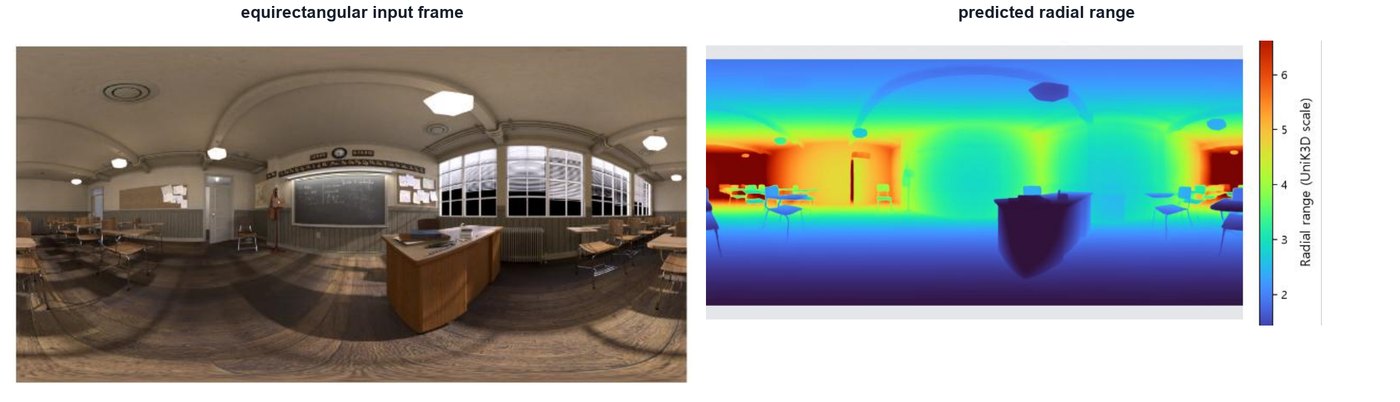
Wide field of view handled natively. A fisheye lens breaks the pinhole assumptions the standard pipeline is built on, and converting to perspective images throws away exactly the peripheral field of view that a surround view needs. We therefore keep the spherical geometry throughout: pixels are treated as direction vectors, camera z-depth becomes radial range, and reprojection error in pixels becomes angular error between rays, with the corresponding spherical Jacobian and latitude weighting. The same reformulation was first validated on equirectangular 360° input before being carried over to the vehicle’s fisheye rig.
Rig constraints instead of free-form structure-from-motion. The four cameras are bolted to the body, so their relative poses are fixed and known. The unknowns collapse from one pose per camera to a single body pose per time step, and all four views update one shared Gaussian map simultaneously. This is a much better conditioned problem than posing each camera independently, and considerably more robust than classic structure-from-motion on a rig with this little overlap between neighbouring cameras — under two metres from the car, adjacent fisheye views share only a few percent of their visible surface.
Improving the representation underneath. Running alongside this system is a separate line of work on the Gaussian representation itself: treating primitives as volumetric participating media rather than oriented surface elements, and reformulating gradient accumulation at the fragment level so that heavily overlapped Gaussians produce a sharper optimisation signal. Both matter directly for a driving rig, which observes surfaces at grazing angles through long stacks of overlapping primitives — precisely the regime where the standard formulation is weakest. Gains there raise the ceiling for everything described above, and the work is pursued on its own rather than as part of this pipeline.
Where the work stands
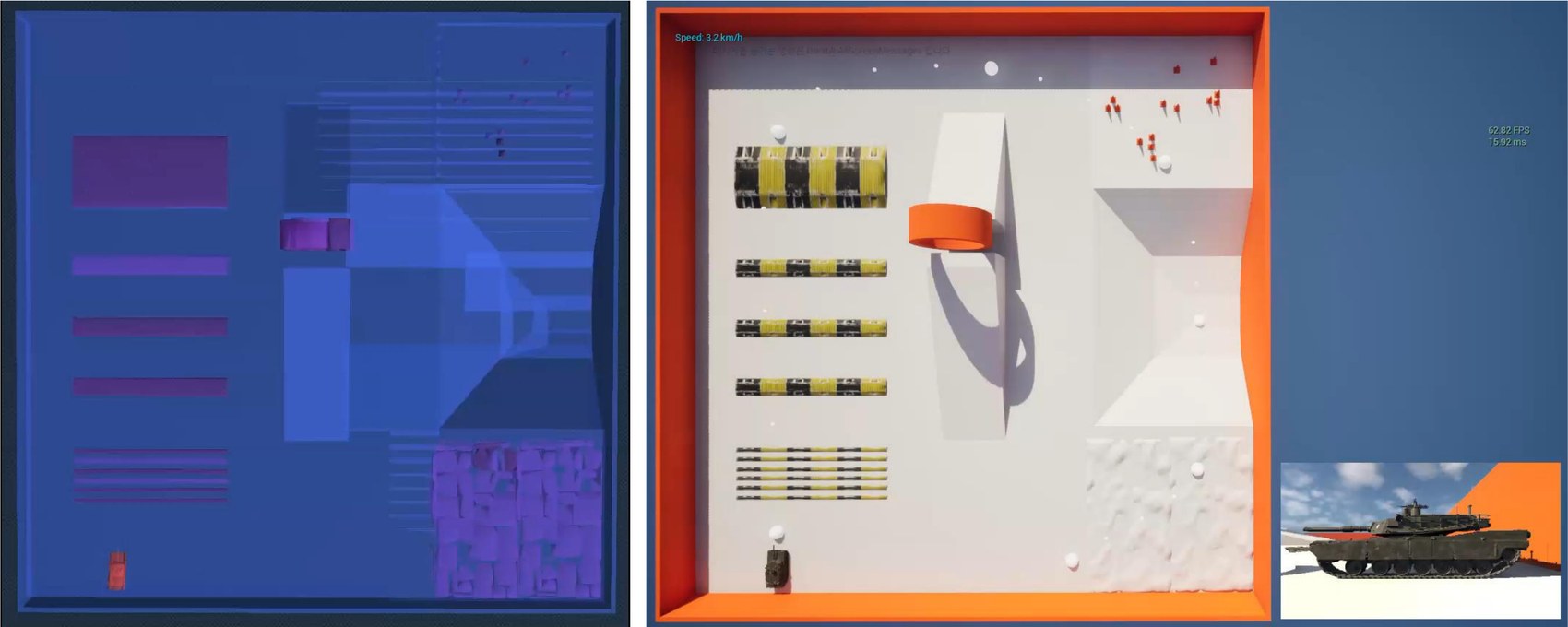
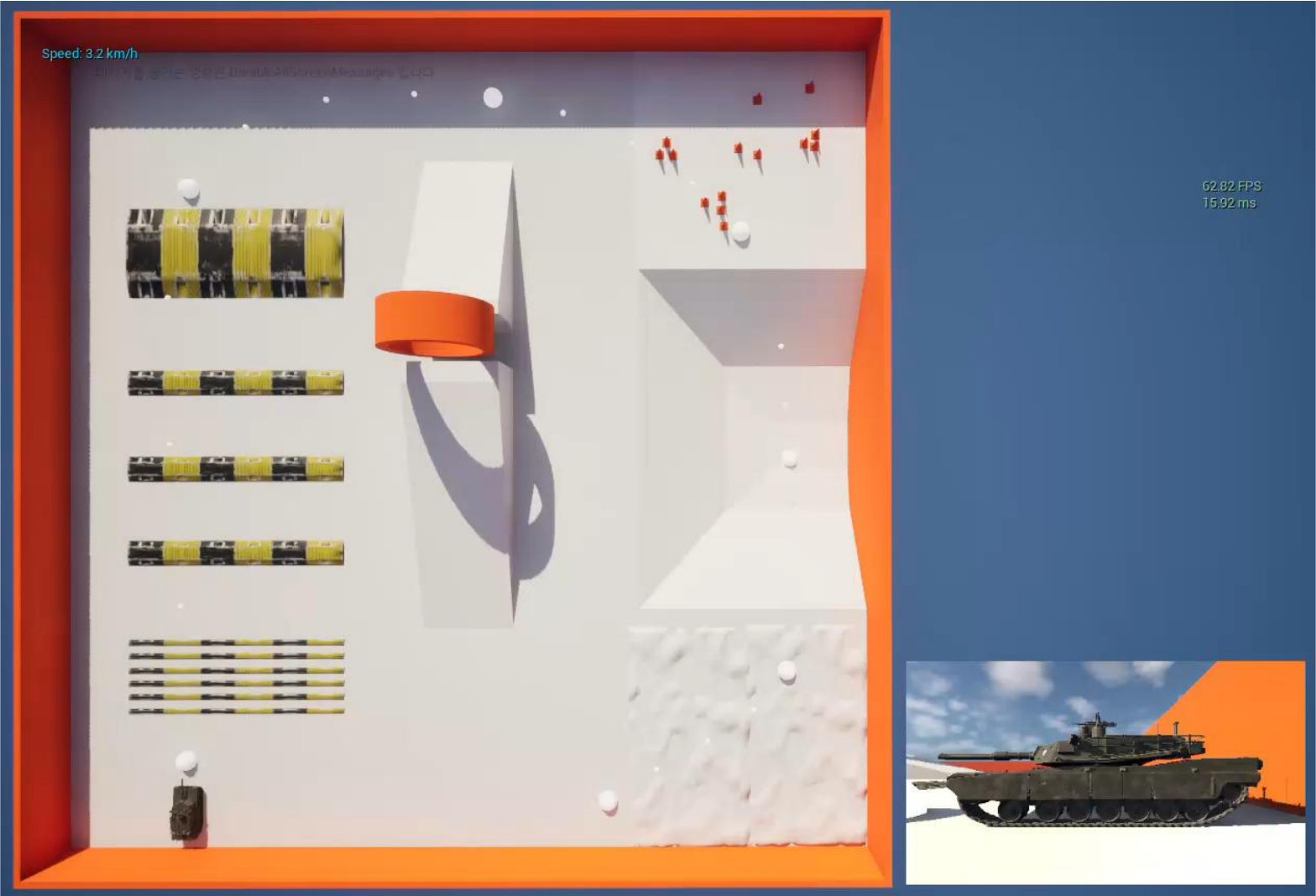
On synthetic underground-parking sequences rendered from a full vehicle rig, the pipeline already runs at interactive time: the map is updated as frames arrive and can be rendered from a free viewpoint while the manoeuvre is still in progress, and those free-viewpoint top views already carry the height information that IPM discards. An offline reconstruction of the same data serves as the ceiling — what these Gaussians can express when the whole sequence is optimised at once, with no per-frame budget at all.
Raising quality at interactive time is the current work. We treat the update rate as a fixed constraint rather than something to trade away: the question is how much of the offline quality can be recovered while the map keeps updating during the drive. In practice that comes down to two decisions made every frame — where a limited budget of new Gaussians should be spent, and how much of the existing map can be corrected before the update stops keeping pace with the cameras. The streaming result thins out first at the seams between adjacent fisheye views and on surfaces that only become visible late in the manoeuvre, which is where that budget currently goes.
programming experience
Python, PyTorch, CUDA, custom rasterizer kernels, fisheye and spherical camera models, incremental pose estimation, COLMAP/SfM pipelines, Blender synthetic data generation